

Table of Contents
- Why Dog Hair Clings to Car Upholstery (and What Actually Loosens It)
- What You'll Need: Tools for Removing Dog Hair from Car Upholstery
- The Best Pet Hair Removal Tool for Cars: A Cost and Effectiveness Comparison
- Step-by-Step: How to Remove Dog Hair from Car Upholstery
- Removing Embedded Dog Hair from Car Carpet and the Trunk
- Fabric vs. Leather: Matching Your Method to Your Car Interior
- How to Prevent Dog Hair in Car Seats and Carpet
- Conclusion
- Frequently Asked Questions
Last Updated: October 8, 2026
Why Dog Hair Clings to Car Upholstery (and What Actually Loosens It)
Dog hair weaves into fabric car seats because upholstery fibers trap particles. When your dog shifts, sheds, or shakes, loose fur settles deep into those fibers, and static electricity holds it there.
That is why a quick wipe rarely works: the hair is tangled inside the weave, not sitting on top.
What loosens it? Friction and agitation. Rubbing the fabric with a rubber surface creates grip that pulls hair up and clumps it, so you can lift it off instead of chasing single strands.
The fix is simpler than most think: the right order of steps and a few low-cost tools.
Below, we will show you exactly how to remove dog hair from car upholstery without damaging the fabric.
What You'll Need: Tools for Removing Dog Hair from Car Upholstery
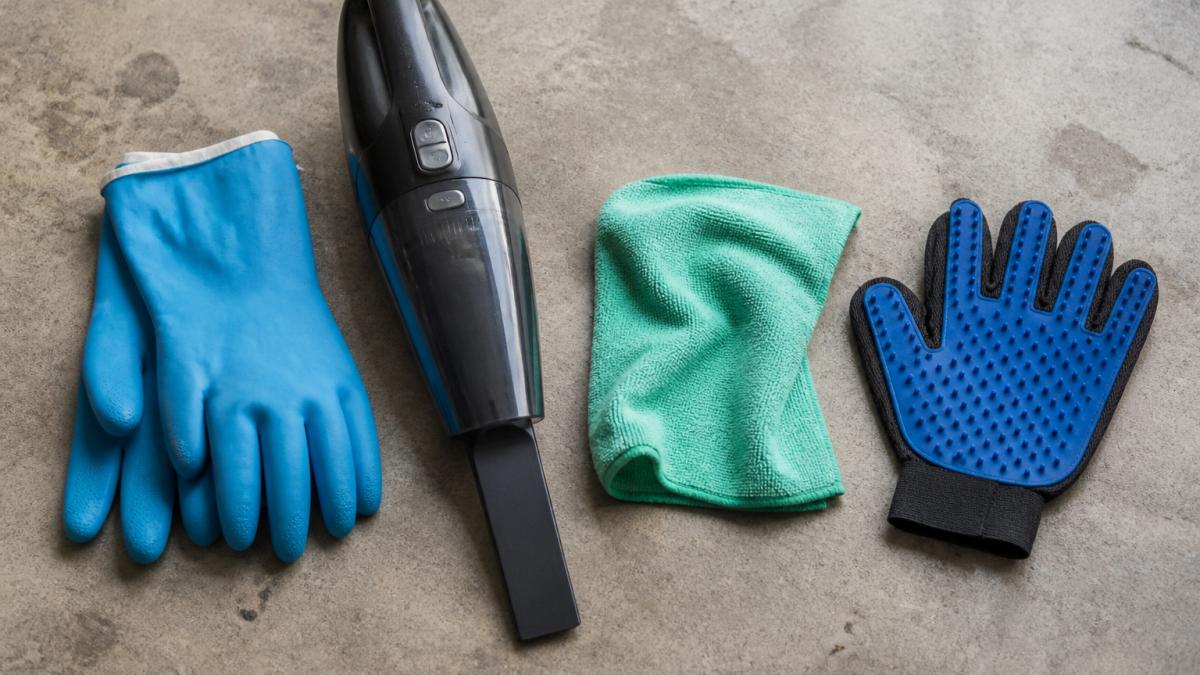
You do not need a full detailing kit. Five basic items handle almost every situation:
- Rubber gloves or a rubber brush to loosen hair
- A handheld or stick vacuum with a crevice tool and brush attachment
- A lightly damp microfiber cloth for the final pass
- Compressed air for tight seams and vents
- A pet grooming glove to cut down shedding before it starts
Brush attachments can help loosen pet hair trapped in fabric upholstery, making it easier to remove with a vacuum.
For most owners, a cordless handheld vacuum does the heavy lifting, reaching seat seams, footwells, and the trunk without a cord.

The Best Pet Hair Removal Tool for Cars: A Cost and Effectiveness Comparison
Most guides list tools without saying which to buy first. This section ranks common options by what they do, their cost, and where each fails.
The core principle: no single tool removes dog hair from car upholstery. You need one to loosen hair and one to collect it. Buying only a vacuum is the most common mistake.
|
Tool |
Typical Cost Band |
What It Does Best |
Where It Falls Short |
|---|---|---|---|
|
Rubber glove or rubber pet brush |
Lowest |
Loosening embedded hair from fabric weave |
Does nothing on its own, you still need a vacuum |
|
Pumice-style stone or block |
Low |
Pulling short, needle-like hair out of dense carpet pile |
Can abrade delicate fabric if pressed too hard; test first |
|
Anti-static brush |
Low |
Releasing hair held by static on seats and headliners |
Slower on long hair that clumps easily |
|
Handheld cordless vacuum |
Moderate |
Seat seams, footwells, quick touch-ups |
Small dust bin; suction drops as the filter loads |
|
Stick vacuum with powered brush head |
Moderate to higher |
Full interior deep cleans on fabric seats and carpet |
Bulkier in tight footwells; brush roller can wrap long hair |
|
Damp microfiber cloth or sponge |
Lowest |
Final pass to grab leftover surface hair |
Only works on the surface; never soak the fabric |
|
Compressed air can |
Low |
Blasting hair out of vents, seat rails, and deep crevices |
Displaces hair rather than removing it, vacuum right after |
How to read this table. If you own nothing, start with a rubber glove and a handheld vacuum, that pair handles most jobs.

A note on cost bands. Rubber gloves and brushes sit at the lowest end. Handheld and stick vacuums sit in the middle to upper range depending on suction and battery.
Effectiveness ranking for stubborn hair. For hair woven deep into fabric, rubber agitation beats suction. For surface hair, a vacuum with a brush attachment wins. For short, needle-like hair, an anti-static brush or pumice-style tool outperforms both.
Step-by-Step: How to Remove Dog Hair from Car Upholstery
Follow this order for better results in less time. The key is to loosen hair before you vacuum, not after.
Step 1: Loosen Embedded Hair Before You Vacuum
Start by breaking the grip hair has on the fibers. Put on a rubber glove or grab a rubber brush. Press down and drag in short strokes across the seat.
You will see hair clump into little piles, exactly what you want. Clumped hair is easy to pick up; loose strands are not.
Work in sections: seat base, backrest, then seams. Do not skip the seams, that is where the worst buildup hides.
Step 2: Vacuum with the Right Attachment
Switch to the brush attachment for flat fabric and the crevice tool for seams and gaps. Move slowly. Fast passes leave hair behind.
For a deeper clean, use strong suction: a cordless stick vacuum with a brush head works well on carpets and fabric seats, while a handheld model suits tight corners and quick touch-ups.
Empty or rinse the filter when you finish. A clogged filter kills suction fast.
Step 3: Finish the Fabric Seats and Carpet
Wipe the seats with a lightly damp microfiber cloth. The slight moisture grabs leftover hair the vacuum missed. Wring the cloth out well first. You want damp, not wet.
120W Cordless Handheld Vacuum Cleaner – Portable Car & Home Vacuum →
For carpet and trunk areas, repeat the same three steps: loosen, vacuum, wipe. Then let everything air dry before your dog hops back in.
Removing Embedded Dog Hair from Car Carpet and the Trunk
Car carpet holds hair tighter than seat fabric because the pile is denser. Removing embedded dog hair from car carpet takes more patience, but the method is the same.
Start with a rubber brush, working in one direction. Vacuum with a crevice tool along edges and under seats, then finish with compressed air to blast hair out of deep pile and vents.
For the trunk, lift the cargo mat first. Hair loves to collect underneath it. Clean the mat separately, then tackle the carpet below.
Short, needle-like hair is hardest to remove, it slips past the surface and digs in. Use an anti-static brush with shorter, firmer strokes; static holds this hair in place, so cutting static helps it release.
Fabric vs. Leather: Matching Your Method to Your Car Interior
Most guides treat every car interior the same, which is how people scratch leather, snag headliners, and soak seat padding. The right method depends on the surface.
|
Surface |
Main Challenge |
Best Method |
What to Avoid |
|---|---|---|---|
|
Cloth and woven fabric seats |
Hair woven into the fiber weave |
Rubber tool to loosen, then vacuum with brush attachment |
Stiff brushes that pull threads; soaking with liquid |
|
Leather and synthetic leather |
Hair sits on the surface, held by static |
Damp microfiber cloth, light vacuum pass |
Rubber brushes and pumice tools that can scratch or dull the finish |
|
Carpet and trunk |
Dense pile traps hair deep |
Brush in one direction, vacuum with crevice tool, compressed air |
Long sweeping strokes that push hair deeper |
|
Cloth headliner |
Delicate, easy to snag or sag |
Low suction, soft brush only, light touch |
Crevice tools, stiff brushes, moisture |
|
Suede or Alcantara-style inserts |
Sensitive nap, easily matted |
Soft brush, low suction, dry methods only |
Water, steam, and aggressive agitation |
Fabric seats. Fabric traps hair inside the weave, so it needs agitation before suction.
Leather and synthetic leather. Hair mostly sits on the surface. Skip the rubber brush, which can scratch the finish.
Carpet and trunk. The pile is denser than seat fabric, so hair digs in deeper.
Cloth headliner. This is the surface people ruin most often, thin material glued to a backing. Use low suction and a soft brush only.
Suede or Alcantara-style inserts. These need dry methods only. A soft brush and low suction are safe. Water, steam, and aggressive agitation can mat the nap permanently.
Moisture rules that apply everywhere. Damp is fine on fabric and leather; wet is not. Excess water soaks into padding and causes mildew and odor.
How to Prevent Dog Hair in Car Seats and Carpet
Prevention beats cleaning. A few habits keep hair from building up in the first place.
- Brush your dog before every car ride
- Use a waterproof seat cover on the rear bench
- Keep a grooming glove in the car for quick touch-ups
- Vacuum weekly instead of monthly
- Shake out mats after every trip
A waterproof dog car seat cover is the single biggest time-saver, catching hair, dirt, and muddy paws before they reach your seats. When dirty, just wipe it down or vacuum it.

For shedding control at the source, a 2-in-1 pet grooming glove removes loose fur during regular petting. Less loose fur on your dog means less fur in your car.
Conclusion
Dog hair in your car is frustrating, but not permanent. Loosen the hair first, vacuum it up, then finish with a damp cloth, that order makes all the difference.
At Nuksy, we stock practical tools that make this job easier. Our 120W cordless handheld vacuum reaches seat seams and tight corners with multiple attachments. The waterproof dog car seat cover protects your rear bench from hair and muddy paws. And the 2-in-1 pet grooming glove cuts shedding before it starts.
Nuksy offers free standard shipping on eligible U.S. orders, secure checkout, and 30-day returns on eligible items. See our shipping and return policies for details.
Frequently Asked Questions
What is the fastest way to remove dog hair from car seats?
Loosen the hair first, then vacuum. Press a rubber glove or rubber brush into the fabric in short strokes to gather hair into clumps, then run a vacuum with a crevice tool or upholstery brush over the same area. This order matters because vacuuming alone pulls at surface hair while the strands woven into the upholstery fibers stay put. A 120W cordless handheld vacuum with the included attachments handles the pickup step on seats, seams, and footwells without dragging out a full-size machine.
How do you get embedded dog hair out of car carpet?
Work in one direction with a rubber brush or a slightly damp sponge to pull the hair up out of the fibers, then vacuum immediately before it settles back. Compressed air can help lift hair from deep in the pile, but vacuum right after or you'll just move the hair to another part of the car.
Does a pet hair removal glove really work on car upholstery?
Yes, with the right expectations. A grooming glove with a silicone surface is built for lifting loose fur off furniture and similar surfaces, so it works well on fabric car seats as a loosening step. It won't pull hair that's deeply embedded in carpet pile, and it won't replace a vacuum. Use it to gather surface hair into clumps, then vacuum up what you've collected. It's also handy for grooming your dog before a ride so less hair ends up in the car in the first place.
How do I keep dog hair out of my car between deep cleanings?
A waterproof rear seat cover is the simplest line of defense. A cover made from 600D Oxford fabric with a waterproof PVC coating keeps hair, dirt, and muddy paws off the seat itself, and it can be wiped with a damp cloth or vacuumed during routine maintenance. Measure your rear seat before ordering to confirm fit, and use the adjustable headrest straps and seat anchors to keep it from shifting. Brush your dog before trips and keep a rubber glove in the car for quick touch-ups.