

Table of Contents
- What a Soap Dispensing Brush Actually Does
- Soap-Dispensing Brush Pros and Cons
- Soap-Dispensing Brush vs. Regular Dish Brush
- Cost Per Use and Long-Term Value
- How to Use a Soap-Dispensing Dish Brush
- How to Clean a Dish Brush
- Who Should Buy One (and Who Should Skip It)
- Frequently Asked Questions
Last Updated: October 19, 2026
What a Soap Dispensing Brush Actually Does
A soap dispensing cleaning brush is a manual scrub brush with a refillable reservoir built into the handle that releases cleaning liquid through the bristles when you press a button. This guide from Nuksy breaks down whether that convenience justifies the extra cost, where these brushes fall short, and which households get real value from one.

The core idea is simple: load the handle with dish soap or a cleaning liquid, press the button, and scrub. No separate bottle, no pouring soap onto a sponge, no juggling two items at the sink. The brush carries the soap for you.
That single change is the entire pitch. Everything else, including whether the brush is worth owning, flows from how much that convenience matters in your daily routine.
Soap-Dispensing Brush Pros and Cons
The honest answer is that these brushes solve a narrow problem well and create a few new ones. Here is the trade-off in plain terms.
Pros:
- One-handed operation: soap and scrubbing happen together
- Less soap wasted, since you dispense on demand rather than pouring freely
- Bristles reach into textured surfaces a sponge glides over
- A refillable handle means fewer bottles cluttering the sink
Cons:
- Soap flow can clog or slow if the liquid is too thick
- Buttons and seams add places for residue to collect
- Heavier and bulkier than a plain brush
- Replacement heads and internal parts add long-term cost
A common mistake is buying the cheapest option and judging the whole category by it. The dispensing mechanism is where quality shows up, and a stiff button or a leaking reservoir ruins the experience fast.
Soap-Dispensing Brush vs. Regular Dish Brush
A regular dish brush is simpler, cheaper, and easier to keep clean. A soap-dispensing brush trades that simplicity for convenience, and the comparison comes down to how you actually wash dishes.
| Feature | Soap-Dispensing Brush | Regular Dish Brush |
|---|---|---|
| Soap delivery | Built-in reservoir, push-button | Separate bottle or sponge |
| Setup effort | Fill handle, then scrub | Squirt soap, then scrub |
| Cleaning the tool | More parts to rinse and dry | Rinse and go |
| Upfront cost | Higher | Lower |
| Failure points | Button, reservoir, seals | Bristles only |
| Best for | Frequent, varied cleaning | Simple daily dishwashing |
The regular brush wins on upkeep. Fewer parts means less to clog, less to rinse, and less to replace. The dispensing brush wins when you are scrubbing multiple items in a row and do not want to stop and re-soap.
Cost Per Use and Long-Term Value
Most reviews stop at the sticker price. The real question is cost per wash, and that number depends on four things: what you pay upfront, how much soap the brush consumes, how often you replace the head, and how long the dispensing mechanism keeps working. Here is the framework.
The four cost drivers
- Upfront price: a dispensing brush costs more than a plain dish brush because of the reservoir, button, and seals. That premium is the entry fee for convenience.
- Soap consumption: on-demand dispensing usually uses less soap than free pouring, because you release short presses instead of dumping a pool onto a sponge. Over a year of daily dishwashing, that difference can offset part of the upfront premium.
- Replacement heads: bristles wear out before the handle does. A brush with easily swappable heads spreads the purchase price across multiple head cycles; a brush with a sealed, non-replaceable head forces a full replacement when the bristles splay.
- Mechanism lifespan: a button that sticks or a reservoir that leaks ends the brush's useful life early, no matter how good the bristles still are. This is the variable that most changes the math.
How to think about cost per use
Divide the total you spend on the brush (purchase price plus any replacement heads plus the soap it consumes) by the number of washes you get before it fails or the bristles wear out.
A practical way to estimate: count how many times per week you reach for the brush. If you scrub dishes, shoes, and household surfaces several times a day, the per-use cost of a durable dispensing brush drops quickly.
Where the premium pays off
A dispensing brush earns its cost fastest when it replaces more than one tool. If it handles dishes, shoes, fabric, and everyday washable surfaces, you are spreading the purchase across several jobs instead of buying a separate brush for each. That is the value case, and it is stronger than the convenience case alone.
For shoppers weighing this, Nuksy's Soap Dispensing Cleaning Brush uses a refillable reservoir, push-button dispensing, and dense scrubbing bristles, with a built-in hanging loop for drying between uses.
The durability question
The honest pattern is that the mechanism, not the bristles, is usually the first thing to go. A brush that dispenses reliably for a year is a better value than one that dispenses perfectly for two months and then dribbles or seizes.
How to Use a Soap-Dispensing Dish Brush
Using one well takes about a minute of setup and a small change in habit. The goal is controlled soap flow, not a flood.
Soap Dispensing Cleaning Brush – Refillable Scrub Brush →
- Twist or pop open the reservoir and fill it with dish soap or a diluted cleaning liquid.
- Seal it firmly. A loose cap is the most common cause of leaks.
- Wet the bristles and the surface before scrubbing.
- Press the button once and scrub. Add soap only when the suds fade.
- Rinse the brush head and shake out excess water when finished.
- Hang it to dry using the loop so water drains away from the reservoir.
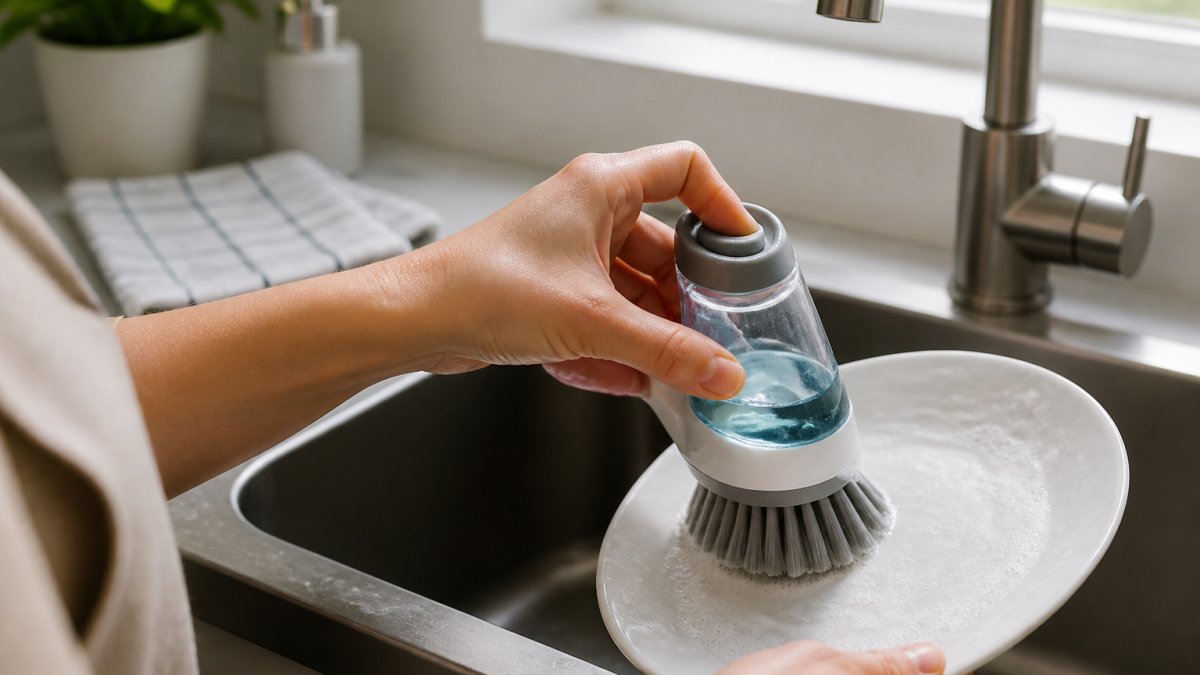
The habit shift is dispensing in short presses instead of one long squeeze. Small presses keep soap where you are scrubbing and cut waste.
How to Clean a Dish Brush
A dish brush that stays wet and soapy becomes a hygiene problem, and a dispensing brush has more places for residue to hide than a plain one. Cleaning it takes under a minute and should happen after every few uses. This is the part most reviews skip, so here is the full routine, including the reservoir.
The daily rinse
- Rinse bristles thoroughly to remove food and grease trapped at the base.
- Press the button and flush warm water through the dispensing channel to clear clogs.
- Shake out excess water and stand or hang the brush bristles-down so water drains away from the reservoir.
The weekly deep clean
- Empty any remaining soap from the reservoir. Old soap thickens and can clog the channel.
- Fill the reservoir with warm water, press the button repeatedly, and let the water flush through the dispensing path.
- For stubborn residue, add a drop of dish soap to the warm water and flush again, then rinse with plain water.
- Wipe the button and seams with a damp cloth, since these are where residue collects.
- Leave the reservoir cap open to air dry fully before refilling.
Why drying matters more than most people expect
A brush left sitting in a wet sink or a closed cabinet stays damp, and damp bristles are where odors and buildup start. The hanging loop exists for exactly this reason. Store the brush bristles-down in open air, not flat in a sink or jammed into a caddy where water pools around the base. If your sink does not have a hook, a small suction cup hook on the backsplash works.
Soap viscosity and clogging
Thick, concentrated dish soap moves slowly through narrow channels and is the most common cause of a stiff button or a clog. If the button feels hard to press or soap stops flowing, thin the liquid slightly with water, flush the channel, and refill. Diluted soap dispenses more smoothly without changing how well it cleans. Very thick gels and some concentrated formulas are the usual culprits; a watery mix is easier on the mechanism.
When to replace the head
Replace the head when bristles splay, darken, or stop scrubbing effectively. Splayed bristles do not reach into textured surfaces, and darkened bristles are a sign that residue has built up at the base. If the head is not replaceable, the whole brush is done at that point, which is why replaceable heads matter for long-term value.
Who Should Buy One (and Who Should Skip It)
A soap-dispensing brush is worth it for people who scrub a variety of surfaces regularly and want soap on demand without a second bottle. It is a poor fit for anyone who wants the simplest possible tool and does not mind reaching for soap separately.
Buy one if you:
- Clean shoes, fabric, and household surfaces often, not just dishes
- Want one-handed scrubbing without stopping to re-soap
- Prefer controlled dispensing over free pouring
Skip it if you:
- Wash a couple of plates a day and nothing else
- Want zero maintenance and the fewest parts possible
- Have had bad luck with leaking or clogged dispensers before
For heavier scrubbing jobs around the house, a cordless option like [Nuksy's Cordless Electric Spin Scrubber](https://nuksy.store/products/cordless-electric-spin-scrubber) handles tubs, tile, and floors with eight interchangeable heads and an adjustable handle, so the manual dispensing brush and a powered scrubber can cover different jobs rather than compete.

Frequently Asked Questions
Are soap-dispensing brushes worth buying?
For many households, yes. A soap dispensing brush cuts the step of squirting dish soap onto a sponge or into the sink, and it keeps soap right at the bristles while you scrub. That saves time on greasy pans and stuck-on food. The trade-off is a higher upfront cost than a plain brush, plus refilling and occasional clogging. If you wash dishes daily and want one-handed convenience, the value is there. If you only hand-wash a few items a week, a regular dish brush is the simpler buy.
Is a soap-dispensing brush better than a regular dish brush?
It depends on how you wash dishes. A soap dispensing brush wins on convenience: soap flows through the bristles on demand, so you use less dish soap and skip the extra squeeze step. A regular dish brush wins on simplicity and price. It has no reservoir to clog or refill, and it dries faster because there is no soap trapped inside. For heavy daily dishwashing and greasy cookware, the dispensing brush is the more efficient tool. For light use or tight budgets, the regular brush holds up well.
How does a soap-dispensing dish brush work?
You fill a refillable reservoir inside the handle with dish soap, then press a button to release soap through the bristles as you scrub. The push-button design lets you control how much soap comes out, so you can apply it exactly when you need it instead of soaking the whole sponge. Most models hold enough dish soap for several washing sessions before a refill. Because the soap travels through a small channel, thick or gel soaps can clog it, so thinner liquid dish soap works best.
How do you clean and maintain a soap-dispensing brush?
Rinse the bristles in warm water after each use, then press the button to flush soap through the channel so residue does not harden. Once a week, fill the reservoir with warm water and a little vinegar, shake it, and dispense until it runs clear. Let the brush air-dry bristles-up or hang it by its loop. Skip the dishwasher for the handle, since heat can warp the reservoir. Replace the brush head when bristles splay or start to smell, usually every few months with daily use.
The real question is not whether a soap-dispensing brush is a gimmick, but whether its convenience fits how you clean. If you scrub varied surfaces and want soap exactly when you need it, a refillable brush earns its place by the sink. Nuksy carries practical cleaning tools built for everyday use, with free U.S. shipping on every order, easy returns, and secure checkout. Browse the cleaning lineup and pick the brush that matches the jobs you actually do.