

Table of Contents
- What the Best Hemorrhoid Seat Cushion Actually Does
- Donut Pillow for Hemorrhoids: Relief With a Trade-Off
- Contoured Seat Cushion Designs: Wedge and Coccyx Cutout
- Memory Foam Hemorrhoid Cushion vs Gel and Inflatable
- How to Choose a Seat Cushion for Hemorrhoids
- Durability, Cleaning, and Long-Term Value
- What a Cushion Can't Fix: Limits and Alternatives
- Frequently Asked Questions
Last Updated: October 10, 2026
What the Best Hemorrhoid Seat Cushion Actually Does
The best hemorrhoid seat cushion does one job well: it moves pressure away from the perineum and tailbone so sitting stops feeling like a punishment.
A hemorrhoid seat cushion is a shaped foam, gel, or air-filled pad designed to redistribute body weight away from sensitive tissue while seated. The concept sounds simple. The execution is where most buyers get it wrong.
Here is the part most guides skip: a cushion cannot treat hemorrhoids, and no product on the shelf will. What a good cushion can do is reduce direct pressure on the area, which many people find makes prolonged sitting more tolerable.
Donut Pillow for Hemorrhoids: Relief With a Trade-Off
A donut pillow for hemorrhoids is the classic ring-shaped cushion with a hole in the center, and it remains the most recognized option on the market. The ring suspends the perineum over open space, which removes direct contact pressure.
The mechanism is simple to picture. Body weight lands on the ring of foam around the opening rather than on the sensitive tissue in the middle. That works well when the sit is brief and the user stays still.
The trade-off shows up over time. A donut cushion also tends to slide on smooth chair surfaces, and the open center can feel unstable on soft seating.
When a Ring Shape Helps and When It Hurts
- Helps: short sits, recovery periods, occasional desk work, users who want firm localized relief
- Hurts: multi-hour sitting, users with tailbone pain, anyone who shifts position often
- Watch for: a ring that is too firm, too tall, or too narrow for the user's frame
The Limit Most Product Pages Skip
A donut pillow, like any seat cushion, is a comfort tool rather than a treatment. It cannot shrink hemorrhoids, stop bleeding, or resolve the underlying cause. What it can do is reduce direct pressure on the area, which many people find makes prolonged sitting more tolerable. That distinction matters, because shoppers who expect a cure end up disappointed, while shoppers who expect pressure relief often get exactly that. Anyone with persistent pain, bleeding, or swelling should see a healthcare provider rather than shop for another pad.
Matching the Ring to the User
A donut is not a universal fit. A ring that is too tall lifts the pelvis and tilts the spine; one that is too narrow presses into the hips; one that is too firm creates new pressure points at the edges. A practical approach is to match the ring's outer width to the user's hip width and its height to the chair. On a firm office chair, a low-profile ring stays stable.
Many buyers assume the donut is the only choice. It is not, and for all-day sitting it is rarely the best one. The sections below compare the alternatives that tend to work better for extended use.
Contoured Seat Cushion Designs: Wedge and Coccyx Cutout
A contoured seat cushion is shaped to match the body rather than suspend it, and it solves the pressure problem differently than a ring does. Instead of a hole, these designs use a raised back and a scooped channel that runs toward the front.
Wedge cushions take another approach. The angled surface tilts the pelvis forward slightly, which can ease pressure on the lower back and encourage better posture.
Design |
Pressure Approach |
Best For |
Main Drawback |
|---|---|---|---|
Donut ring |
Suspends perineum over open center |
Short sits, targeted relief |
Pressure band on surrounding tissue |
Coccyx cutout |
Relieves tailbone, supports thighs |
Full workdays, tailbone pain |
Bulkier than a ring |
Wedge |
Tilts pelvis forward |
Posture support, lower-back discomfort |
Less direct perineal relief |
Inflatable ring |
Adjustable firmness via air |
Travel, temporary use |
Can leak, less stable |
For most people who sit for hours, a contoured or cutout design beats a ring. That is the honest answer, even though the donut gets all the attention.
Memory Foam Hemorrhoid Cushion vs Gel and Inflatable
A memory foam hemorrhoid cushion molds to body shape and spreads load across a wider area, which is why it suits long sitting sessions. The foam compresses where pressure is highest and stays supportive elsewhere.
Gel inserts behave differently. A gel cushion stays cooler and returns to shape quickly, but gel alone can feel firm and heavy.
Inflatable rings win on portability. They pack flat, adjust firmness with a few breaths of air, and cost less than foam. They also puncture, slowly lose air, and offer the least stable seating surface of the three.
Cooling, Breathability, and Skin Sensitivity
Heat and moisture make irritated tissue worse, so breathability is not a luxury feature. Gel layers run cooler than solid foam. Open-cell foam breathes better than memory foam, which traps heat by design. A removable, machine washable cover matters just as much, because skin sensitivity and hygiene go hand in hand with daily use. Shoppers with latex allergies should look specifically for latex-free foam.
How to Choose a Seat Cushion for Hemorrhoids
Choosing a seat cushion for hemorrhoids comes down to three variables: how long the user sits, what chair the cushion lands on, and how the cushion fits the body. Get those right and most of the remaining decisions make themselves.
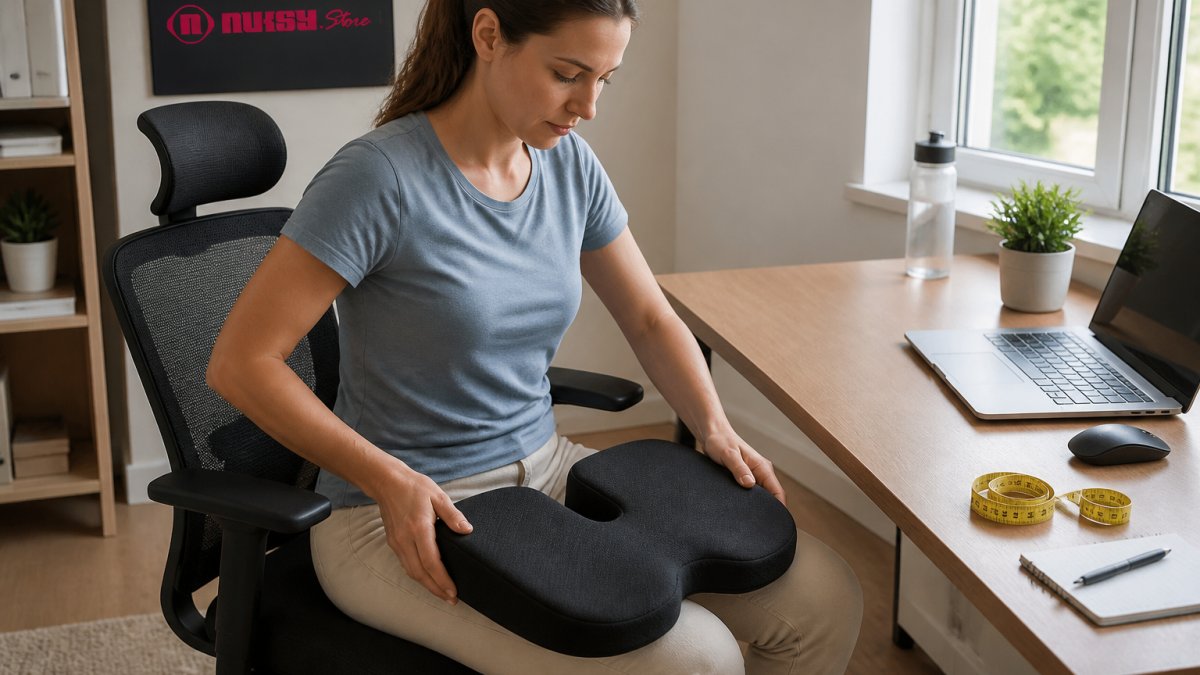
Start with sitting duration. Under an hour at a time points to a donut or inflatable ring. Two hours or more points to memory foam or a contoured cutout design. Next, check the chair. A firm office chair holds a wedge or foam cushion steady. A soft sofa or car seat swallows thin cushions and lets thick ones slide. Finally, size the cushion to the user, not the chair alone.
Fit by Body Size, Chair Type, and Sitting Duration
- Body size: a cushion narrower than the hips creates pressure at the edges; wider is better than narrower
- Chair type: desk chairs take contoured foam; car seats take wedges or low-profile gel; wheelchairs need a stable, non-slip base
- Sitting duration: match firmness to time, softer for short sits, firmer and thicker for long ones
- Stability: a non-slip bottom matters more than most buyers expect, especially on leather
Durability, Cleaning, and Long-Term Value
Durability separates a cushion that lasts a year from one that lasts a month, and the difference usually comes down to foam density and cover construction. High-density foam holds its shape through daily use. Cheap foam develops a permanent dip where the body sits, and once that happens the pressure relief is gone.
How to Judge Foam Before It Fails
Foam quality is hard to see in a product photo, but a few signals help. A denser foam feels heavier for its size and springs back quickly when pressed. A low-density foam feels light, compresses easily, and may stay compressed for a moment after release. Memory foam that recovers slowly is normal, but foam that never fully recovers is a sign it will flatten under daily load. A common pattern is that cushions advertised mainly on softness tend to use lower-density foam, while cushions described as supportive tend to use denser foam. Neither label guarantees quality, but the feel test is a useful starting point.
Cleaning and Hygiene for Daily Use
Cleaning deserves more attention than it gets. Look for a removable cover that is machine washable, since daily use means daily contact with skin. A second cover is worth having so the cushion stays in rotation during laundry. Gel and foam cores should never go in a washer, only the cover.
For users who need frequent cleaning, a few habits help:
- Wash the cover on a gentle cycle and air-dry it to protect the fabric and any elastic
- Spot-clean the foam core with a damp cloth and mild soap, then let it dry fully before replacing the cover
- Avoid soaking the core, which can break down foam and trap moisture
- Keep a spare cover on hand so the cushion is never out of service
Skin sensitivity is part of the same conversation. Heat and moisture make irritated tissue worse, so breathability and washability go hand in hand. Shoppers with latex allergies should look specifically for latex-free foam, and anyone prone to irritation should favor covers that are smooth rather than textured.
Value Beyond the Upfront Cost
Value is not the same as the lowest price. A cushion that flattens in a few weeks costs more per month of use than a denser one that holds up. Shoppers comparing options should weigh construction and washability alongside the upfront cost, and check the return policy before committing.
A simple way to compare is to estimate how many months of daily use each option is likely to deliver, then divide the upfront cost by that number. A cushion that lasts a year at a moderate price often beats a cheaper one that needs replacing every few months.
What a Cushion Can't Fix: Limits and Alternatives
A cushion is a comfort tool, not a treatment. It cannot shrink hemorrhoids, stop bleeding, or resolve the underlying cause, and anyone with persistent pain, bleeding, or swelling should see a healthcare provider rather than shop for another pad. This is the limit most product pages conveniently leave out.
What cushions do well is buy comfort during the hours a person has to sit. Beyond that, small behavior changes often matter more than the cushion itself:
- Stand and walk for a few minutes every hour
- Avoid sitting directly on hard surfaces for long stretches
- Use a footrest so the thighs stay level and pressure spreads evenly
- Add fiber and water, which supports easier bowel movements (Eating, Diet, & Nutrition for Constipation)
- Try warm sitz baths for short-term relief of itching and discomfort
For some users, a standing desk or a sit-stand routine reduces total sitting time more effectively than any cushion can. The best setup usually combines both: a supportive cushion for the sitting hours and fewer sitting hours overall.
Frequently Asked Questions
Does sitting on a cushion help with hemorrhoids?
A cushion can reduce direct pressure on the perineum and tailbone, which may ease discomfort during prolonged sitting. Contoured and memory foam designs redistribute pressure across the thighs and buttocks instead of concentrating it on one spot. A cushion is a comfort aid, not a treatment, so pair it with breaks from sitting and follow your doctor's advice for symptom relief.
Are donut cushions or contoured cushions better for sitting?
It depends on your goal. A donut pillow for hemorrhoids lifts pressure off the perineum, but some users find the ring edge creates new pressure points. A contoured seat cushion with a coccyx cutout supports posture and spreads weight more evenly, which suits longer sitting sessions. Try the shape that matches your sitting duration and chair type.
Can you use a hemorrhoid cushion in an office chair?
Yes. Check the cushion dimensions against your chair seat first. A cushion that overhangs or slides will not stay put through a workday. Look for a non-slip base, a removable cover you can machine wash, and a thickness that keeps your feet flat on the floor. A memory foam hemorrhoid cushion with a coccyx cutout works well for full office days.
How should you clean a seat cushion?
Most cushions come with a removable cover. Check the care label, then machine wash the cover on a gentle cycle and air dry it to protect the foam. Wipe the foam core with a damp cloth and mild soap, and let it dry fully before use. If you have sensitive skin, choose a breathable, latex-free cover and clean it weekly.
Sitting comfortably should not require guesswork, and the right cushion makes a real difference for anyone dealing with pressure, itching, or tailbone discomfort during long days at a desk or behind the wheel. Nuksy carries practical wellness and comfort finds, backed by free U.S. shipping on every order, easy returns, and responsive customer support if a design is not the right fit. Browse the Nuksy comfort collection and find a seat cushion that makes everyday sitting easier.