

Table of Contents
- Why Stairs and Upholstery Are the Hardest Test for Any Handheld Vacuum
- What to Look For in a Handheld Vacuum for Stairs and Upholstery
- Choosing the Best Handheld Vacuum for Stairs
- The Best Vacuum Attachment for Couches and Fabric Furniture
- Handheld Vacuum for Pet Hair on Furniture: What Actually Works
- Stairs and Upholstery Performance Compared: A Side-by-Side Look
- Common Mistakes to Avoid When Cleaning Stairs and Upholstery
- Conclusion
- Frequently Asked Questions
Last Updated: October 19, 2026
Why Stairs and Upholstery Are the Hardest Test for Any Handheld Vacuum
Stairs and upholstery are the hardest test for a handheld vacuum because both surfaces combine awkward angles, tight fabric weaves, and debris that clings instead of lifting.

That gap matters more than most buyers expect.
Here's what most guides get wrong: they rank handheld vacuums on open-floor pickup. Stairs and sofas punish different weaknesses.
The good news is that a small set of features decides the outcome. Get those right and an affordable cordless vacuum handles both jobs well.
What to Look For in a Handheld Vacuum for Stairs and Upholstery
Buy for the surface, not the spec sheet. The best handheld vacuum for stairs and upholstery balances four things: enough suction to pull embedded debris, runtime that covers a full staircase plus a couch, a weight you can hold at shoulder height, and attachments that fit narrow treads and fabric seams.
A handheld vacuum is a compact, battery-powered cleaner designed for spot cleaning rather than whole-room coverage. Its value on stairs comes from portability, not raw capacity.
Suction Power, Runtime, and Weight: The Real Trade-Offs
More suction usually means more weight and shorter battery life. That trade-off is the whole game.
- Suction: Look for a clearly stated motor rating or suction figure. A 120W motor, like the one in the Nuksy cordless handheld vacuum, is built for everyday dust, crumbs, and pet hair rather than deep carpet extraction.
- Runtime: A full flight of stairs takes most people several minutes. Add a couch and you need enough charge to finish without hunting for the charger.
- Weight and grip: You hold a handheld vacuum in one hand while the other hand steadies you on the stairs. Light weight and a comfortable grip matter more here than on flat floors.
Choosing the Best Handheld Vacuum for Stairs
The best handheld vacuum for stairs is the lightest one that still holds suction through a full flight. Stair cleaning is a reach-and-lift job, so ergonomics beat extra power you cannot comfortably control.
Work top to bottom. Start at the top tread, vacuum each tread and riser, then let debris fall toward the landing where a final pass catches it. This one habit cuts cleaning time and stops you from re-dirtying clean steps.
What a Full Staircase Actually Demands
A typical residential flight is 12 to 16 treads plus risers, a landing, and two corners where the tread meets the wall and the riser. That is a lot of short, angled passes rather than one long sweep. Judge a handheld vacuum on four stair-specific measures:
- Weight in hand, not on the spec sheet. A vacuum that weighs a few pounds is easy to lift once. The question is whether you can hold it at chest height for the several minutes a full flight takes. If your wrist tires during a thirty-second test, it will feel far worse on a staircase.
- Balance and grip. A top-heavy body tips forward when you reach over a tread, forcing your wrist to fight it. A centered body and a grip that lets your hand stay neutral reduce fatigue on risers and corners.
- Runtime for the whole job. Time yourself once: a full flight plus a landing usually runs several minutes of trigger time, and trigger time is what drains the battery. Add a couch afterward and you need enough charge to finish without hunting for the charger.
- Reach into corners. The tight corner where tread meets riser, and the gap along the wall stringer, is where grit collects. A narrow crevice tool reaches it; a wide nozzle skips it.
Matching the Tool to the Stair Surface
Stair materials change what the vacuum has to do:
- Carpeted treads trap grit and pet hair in the pile. A motorized brush or a stiff brush attachment agitates the fibers so suction can lift what is lodged.
- Hardwood or laminate treads reward a soft brush or bare nozzle. A stiff brush roll can scuff a finish, so switch tools before you start.
- Painted risers collect fine dust that a soft brush lifts without scratching.
- Open-riser or metal stairs have narrow gaps and edges where a crevice tool does most of the work.
Corded models offer steady power but the cord snags on railings and newel posts, and you end up managing the cord with the hand you need for balance. For most staircases, cordless convenience wins. The Nuksy cordless handheld vacuum is built around one-handed handling with multiple attachments, which suits the reach-and-lift rhythm of stair cleaning.
A Practical Stair Routine
- Clear the treads of loose items and anything that could tumble.
- Fit the crevice tool and run it along the corner where each tread meets its riser, top to bottom.
- Switch to the brush tool and clean each tread in short, overlapping strokes.
- Do the risers last, working downward so dust falls onto treads you have already cleaned, then give those a quick second pass.
- Finish at the landing and empty the bin before it fills.
The Best Vacuum Attachment for Couches and Fabric Furniture
The best vacuum attachment for couches is a soft upholstery tool paired with a crevice tool for seams. The upholstery tool glides over fabric and lifts surface debris; the crevice tool reaches the crumbs packed into cushion folds.
Attachment compatibility is where cheap handheld vacuums fall apart. Many ship with one narrow nozzle and nothing else, which forces you to scrub seams by hand. Check the box list before buying.
Match the Tool to the Fabric and the Debris
Upholstery performance depends on both what the fabric is and what is stuck to it. The same tool that lifts pet hair from microfiber can pull loops from chenille.
120W Cordless Handheld Vacuum Cleaner – Portable Car & Home Vacuum →
- Tight weaves and microfiber: a soft brush attachment lifts hair and lint without snagging threads. The smooth surface lets the tool glide, so you can use moderate suction.
- Loose weaves and chenille: use low suction and a plain nozzle to avoid pulling loops. A brush can catch a loop and run it, so test on a hidden area first.
- Velvet and delicate fabrics: a plain nozzle on the lowest setting, worked in one direction, is the safest choice. Never drag a stiff brush roll across these.
- Seams, piping, and cushion folds: a crevice tool, worked slowly along the fold. This is where crumbs and fine dust pack down hardest and where a flat tool cannot reach.
Debris type matters too. Embedded pet hair needs agitation, a brush or a rubber-edged tool, because hair wraps around fibers and suction alone will not lift it. Loose crumbs and fine dust come up with a plain nozzle and steady, overlapping strokes. Sand and grit on a seat cushion behave like fine dust but abrade fabric if you scrub, so lift rather than press.
Why the Tool Matters More Than the Setting
A common mistake is turning suction to maximum and dragging a bare nozzle across a cushion. That pushes loose hair deeper into the fabric and does nothing for embedded hair.
The Nuksy handheld vacuum ships with multiple cleaning attachments for upholstery, corners, and car interiors, which covers the couch job without extra purchases. A cordless stick vacuum with a soft upholstery tool can handle larger furniture surfaces, while the handheld reaches cushion folds and seams.

A Couch Routine That Covers Every Surface
- Remove cushions and vacuum the deck and the crevice behind the backrest with the crevice tool.
- Vacuum each cushion on both sides with the upholstery tool, working in one direction.
- Run the crevice tool along every piped seam and fold.
- Do the arms and back last, since dust falls onto the seat as you work.
- Empty the bin before it fills, pet hair and fine dust cut suction fast.
Handheld Vacuum for Pet Hair on Furniture: What Actually Works
A handheld vacuum for pet hair on furniture works when it combines a motorized brush with strong, sustained suction. Hair wraps around fabric fibers, so agitation matters as much as pull.
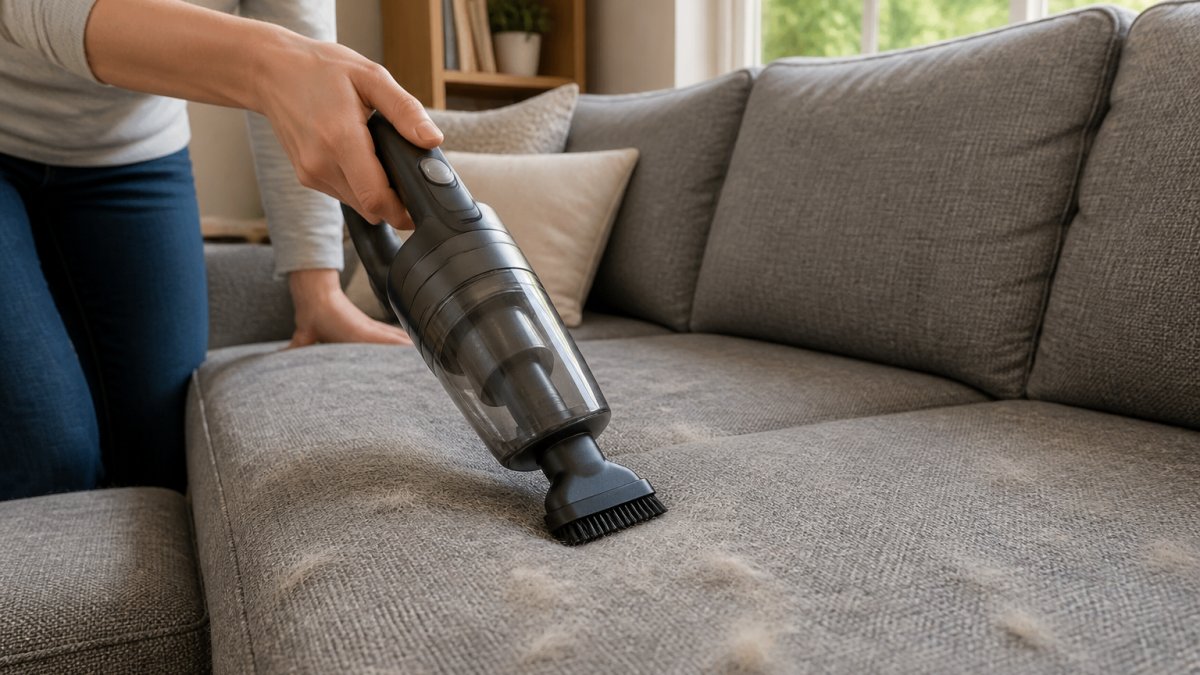
Rubber or silicone-edged tools are the quiet hero here. They gather hair into a clump instead of letting it cling to the brush roll.
A common mistake is vacuuming pet hair with a bare nozzle. It pushes loose hair deeper into the cushion. Use the brush attachment, work in one direction, and finish seams with the crevice tool.
Stairs and Upholstery Performance Compared: A Side-by-Side Look
Performance on stairs and upholstery rarely tracks together, which is why a single "best" label misleads buyers. Stairs reward light weight and reach; upholstery rewards attachment variety and controlled suction.
Here is how the two jobs stack up against the features that decide them:
| Feature | Stairs Priority | Upholstery Priority | Why It Matters |
|---|---|---|---|
| Weight and grip | High | Medium | One-handed control on steps |
| Suction | Medium | High | Lifting hair from fabric |
| Attachments | Crevice tool | Upholstery and brush tools | Reaching seams and treads |
| Runtime | Full flight plus landing | Couch and cushions | Finishing without a recharge |
| Dustbin access | One-hand emptying | Frequent emptying | Pet hair fills bins fast |
| Maneuverability | High | High | Tight angles and cushion folds |
A cordless stick vacuum with strong suction, such as the Nuksy 25KPa cordless stick vacuum, can cover stairs and furniture with its included attachments, while a compact handheld handles quick spot cleans. Matching the tool to the job beats buying one machine for everything.
Common Mistakes to Avoid When Cleaning Stairs and Upholstery
Most cleaning failures on stairs and sofas come from technique, not equipment. Fix the habits below and a modest handheld vacuum performs well.
- Starting at the bottom of the stairs. Debris falls onto clean treads. Always work downward.
- Skipping the risers. Dust settles on the vertical face and gets missed on every pass.
- Overfilling the dustbin. Pet hair and fine dust cut suction fast. Empty at the halfway point.
- Ignoring the filter. A washable filter that stays clogged strangles airflow. Rinse and dry it regularly.
- Using max suction on delicate fabric. High power pulls threads. Match suction to the weave.
Conclusion
Stairs and upholstery expose the real weaknesses in any handheld vacuum: weight, attachment range, and sustained suction on fabric. Buy for those three, work top to bottom, and match the tool to the surface.
Nuksy stocks practical cleaning tools for exactly these jobs, with free U.S. shipping on every order, easy returns, and secure checkout. The 120W cordless handheld vacuum covers stairs, sofas, and car interiors with multiple attachments and a washable filter. Get started with Nuksy and make quick cleanups genuinely quick.
Frequently Asked Questions
What features should I look for in a handheld vacuum for stairs?
Prioritize a lightweight body you can carry in one hand, a runtime long enough to finish a full staircase without recharging, and a crevice tool for the corners where treads meet risers. A brush attachment helps lift debris from carpeted steps, and a washable filter keeps maintenance costs down. Check the dustbin capacity too: a bin that empties quickly saves trips to the trash can mid-clean.
Are handheld vacuums effective for cleaning upholstery?
Yes, for surface debris like crumbs, dust, and pet hair. A handheld vacuum with a motorized brush or upholstery tool lifts hair that a bare nozzle would leave behind. For deep-set dirt or stains, a handheld vacuum is a spot-cleaning tool, not a replacement for a full-size extractor. Use short, overlapping passes and empty the bin often so airflow stays strong.
What is the best vacuum attachment for couches?
An upholstery tool with a brush strip is the go-to for fabric couches because the bristles agitate fibers and release embedded hair and crumbs. A crevice tool handles the seams and the gap between cushions. For pet hair on woven fabrics, a motorized brush roll works best; on delicate fabrics, use a plain upholstery nozzle without a brush to avoid snags.