

Last Updated: October 31, 2026
Quick Summary
A waterproof rear seat cover for dogs protects your back bench by blocking mud, water, fur, and scratches from reaching the upholstery. Measure your bench width, depth, and headrest spacing before buying, then check for a continuous coated backing, sealed seams, and a grippy underside. Fit and grip matter more than fabric weight.
- Measure bench width, depth, and headrest spacing before you shop for a cover.
- A cover sized at roughly 53 inches wide fits many standard cars, SUVs, and trucks.
- Waterproofing comes from the barrier layer, not the woven outer fabric alone.
- Anchor covers with headrest straps, seat anchors, and a non-slip backing together.
- Never machine-dry, iron, or bleach a coated cover because heat cracks the barrier.
Table of Contents
- Why a Waterproof Rear Seat Cover for Dogs Saves Your Back Seat
- How to Measure a Car Back Seat for a Dog Cover
- Materials and Construction: What Makes a Cover Waterproof and Durable
- How to Keep a Dog Seat Cover from Shifting on the Bench
- Dog Hammock Seat Cover vs. Bench Cover: Which Fits Your Setup
- How to Keep Dog Hair Off Car Seats Between Washes
- How to Clean a Dog Seat Cover Without Damaging the Coating
- Common Fit Problems and When to Size Up
- Frequently Asked Questions
Why a Waterproof Rear Seat Cover for Dogs Saves Your Back Seat
A waterproof rear seat cover for dogs is a protective layer that sits over your vehicle's back bench to block mud, water, fur, and scratches from reaching the upholstery.
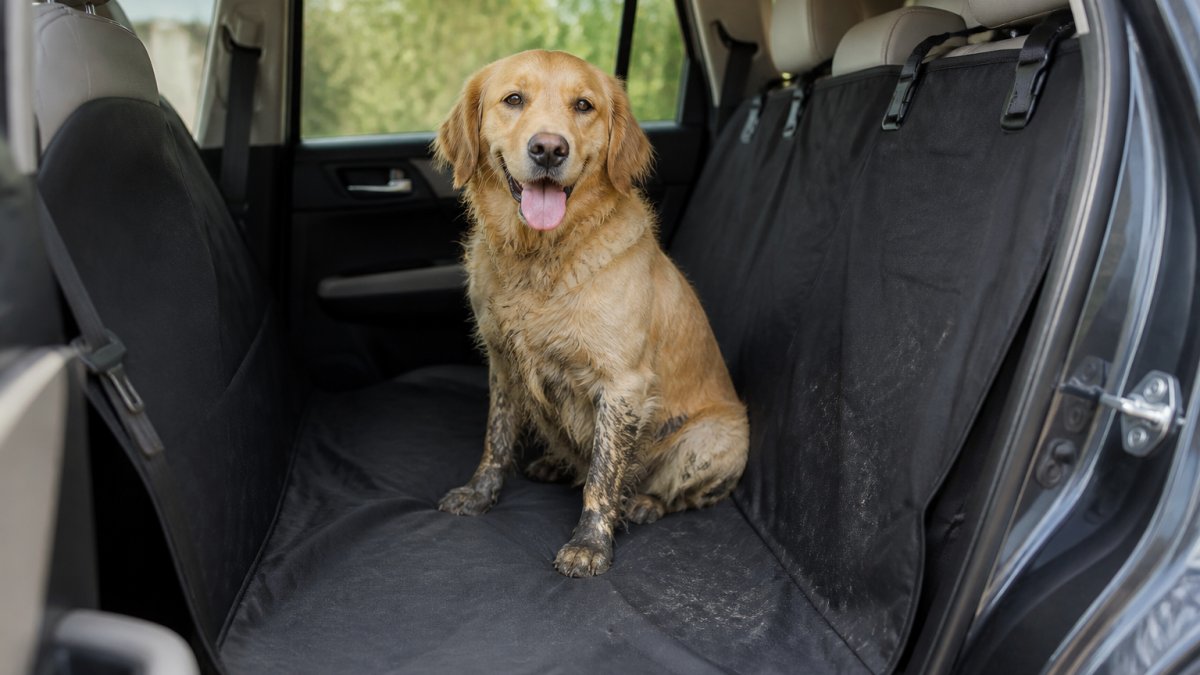
Here is the part most guides skip. A cover only protects the seat if it fits the bench properly and if its backing grips.
Below, we walk through measuring, material checks, installation, and care so the cover earns its place in your vehicle.
How to Measure a Car Back Seat for a Dog Cover
Measuring a car back seat for a dog cover means recording three numbers: bench width, bench depth, and headrest spacing. Write them down before you shop. Guessing from your vehicle model alone can lead to a poor fit, because trim levels and seat shapes can vary within the same model year.
Width, Depth, and Headrest Spacing
Run a tape measure across the widest point of the rear bench, from door to door, for width. Measure from the front edge of the seat cushion back to the seatback for depth. Then measure the distance between the centers of the two outer headrest posts.
Compare those numbers to the cover's listed size. A cover sized at roughly 53 inches wide, like the Nuksy waterproof dog car seat cover, is built for many standard cars, SUVs, and trucks. Still measure first. A bench that is wider than the cover leaves exposed edges, and a bench that is much narrower leaves slack that bunches.
Checking Seat-Belt Opening Alignment
Seat-belt openings must line up with your vehicle's buckle receptacles. Sit in the back seat and note where each buckle sits relative to the seat cushion and seatback seam. If the cover's openings sit far from those points, buckles get buried and passengers cannot belt in without lifting the cover.
Check this before installation day, not after. A misaligned opening is a fit problem, not a defect.
Materials and Construction: What Makes a Cover Waterproof and Durable
Waterproofing comes from the barrier layer, not the fabric alone. A woven outer shell resists abrasion and sheds fur, but it is the coating or laminated backing underneath that stops liquid from reaching the seat.
The Nuksy cover, for example, uses 600D Oxford fabric with a waterproof PVC coating, a combination built for regular travel use.
Look for four things when you compare options:
- A coated or laminated backing. This is the barrier that stops moisture reaching the seat. A coating applied directly to the fabric and a separate laminated film both work; the key is that the barrier is continuous, not just a surface treatment.
- Sealed or reinforced seams. Stitching creates tiny holes. Taped, welded, or tightly reinforced seams are where a cover either holds water out or lets it wick through.
- Reinforced stitching at strap points. Stress collects where straps meet fabric, so bar-tacks or double stitching at those junctions extend service life.
- A grippy underside. Smooth backing slides on leather and vinyl. A textured or rubberized underside adds friction against the bench.
Heavier construction can matter more if your dog is large, restless, or a heavy shedder. For a calm dog on short trips, a lighter cover may be enough and can be easier to fold, store, and reinstall.
How to Verify Waterproof Performance
Check the cover's water resistance before relying on it with a wet dog. Lay it flat, coating side up, and pour a small amount of water on the center. Wait a few minutes. Water should bead and sit on the surface. If it soaks through or leaves a damp patch underneath, the coating may not be performing as expected.
Repeat the check near a seam, since seams are a common place for water to get through.
A practical distinction to keep in mind: water-resistant fabric repels light splashes, but it can still absorb moisture under sustained wetness. Waterproof means a barrier is designed to block liquid passage. If your dog gets wet on rides, prioritize a waterproof backing over a water-resistant shell.
How to Keep a Dog Seat Cover from Shifting on the Bench
Stopping a cover from shifting comes down to three anchor points: headrest straps, seat anchors, and a non-slip backing. Use all three together. One alone rarely holds against a dog that circles before lying down.
Work through this installation checklist:
Waterproof Dog Car Seat Cover – 53" Rear Seat Protector →
- Loop the headrest straps around both rear headrests and tighten them evenly
- Tuck the seat anchors into the crease between the cushion and seatback
- Smooth the cover from the center outward so no folds form under paws
- Press the backing down along the full seat surface
- Test by pressing a knee into the cover and twisting gently
If the cover still creeps forward, the straps are likely too loose or the anchors are not seated deep enough in the crease. Retighten before adding anything else.
Dog Hammock Seat Cover vs. Bench Cover: Which Fits Your Setup
A dog hammock seat cover encloses the back seat like a sling, connecting the front and rear headrests, while a bench cover lies flat over the rear seat only. Hammocks suit dogs that try to climb into the front. Bench covers suit dogs that ride calmly and passengers who need the footwell.
| Feature | Hammock Cover | Bench Cover |
|---|---|---|
| Front-seat barrier | Yes | No |
| Footwell access | Blocked | Open |
| Passenger use alongside dog | Limited | Easier |
| Setup time | Longer | Shorter |
| Best for | Climbers, anxious riders | Calm riders, shared seats |
Choose the hammock if your dog paces or leans forward. Choose the bench style if you regularly carry people and pets together or want fast installation and removal.
How to Keep Dog Hair Off Car Seats Between Washes
Keeping dog hair off car seats between washes means removing loose fur daily and reducing shedding at the source. A rubber glove or damp cloth lifts hair from fabric faster than a dry brush, which just pushes it deeper. Wipe the cover down at the end of each trip with pets.
For deeper hair removal, a guide to removing dog hair from car upholstery covers tools and techniques for woven fabrics. A cordless vacuum suited to car interiors helps with the crevices the cover does not reach. Reducing shedding at the source also helps, and a roundup of grooming tools for heavy shedders covers brushes and deshedding blades by coat type.
How to Clean a Dog Seat Cover Without Damaging the Coating
Cleaning a dog seat cover without damaging the coating means avoiding harsh detergents, high heat, and aggressive scrubbing. The waterproof layer is what keeps your seat dry, and it breaks down fastest under heat and strong chemicals. Most covers will outlast their coating if you clean gently and dry thoroughly.
Routine Cleaning and Drying
Shake the cover out, then wipe it with a damp cloth or vacuum the surface. The Nuksy cover is designed for routine maintenance with a damp cloth or vacuum. For spot messes, use a mild soap and water mix, rinse the cloth, and wipe again. Let the cover air dry fully before reinstalling.
Drying matters as much as washing. Lay the cover flat or drape it over a rail so air reaches both sides. Folding a damp cover traps moisture against the coating and can leave a musty smell or encourage mildew.
Deep Cleaning for Mud and Odor
For mud, let it dry first, then brush off the solids before wiping. Wet mud smears deeper into the weave and pushes grit into the coating. For odor, a diluted vinegar wipe followed by a full air dry usually does the job. Work in the direction of the weave and avoid scrubbing hard enough to abrade the surface.
Long-Term Maintenance and Coating Care
A few habits extend the life of the waterproof layer:
- Rinse off road salt and grit after winter trips; both abrade the coating.
- Re-tension straps periodically so the cover does not rub against itself in the same spot.
- Inspect seams and backing every few months for flaking, cracking, or separation.
- Store dry and loosely rolled rather than compressed, which prevents creases that weaken the barrier.
If the coating begins to flake or the cover no longer beads water, the barrier is failing even if the fabric looks intact. At that point, replacement protects the seat better than repeated cleaning.
Common Fit Problems and When to Size Up
Most fit problems trace back to one of four causes: a bench wider than the cover, headrest straps that will not reach, seat-belt openings that miss the buckles, or a cover that slides on leather. Each has a practical fix before you return anything.
- Exposed seat edges: the cover is too narrow for the bench
- Bunching under paws: the cover is too large or the anchors are loose
- Straps that will not reach: headrest spacing is wider than the cover allows
- Sliding on leather or vinyl: the backing lacks grip
Size up when the cover cannot cover the full bench width or when straps will not reach the outer headrests. If you are unsure about fit, returns, or exchanges, the store FAQ on shipping and returns answers those questions directly. For a cover sized for many standard vehicles, the 53-inch waterproof rear seat protector is the model to measure against.

Frequently Asked Questions
What should I look for in a waterproof rear seat cover for dogs?
Look for a cover made with a waterproof backing, such as a PVC coating over durable 600D Oxford fabric, plus adjustable headrest straps and seat anchors that hold it in place. Check for seat-belt openings so passengers and restraints still work. Confirm the listed dimensions against your own back seat before ordering, and choose a cover you can wipe down or vacuum for routine cleaning.
How do I choose a dog seat cover that fits my car's back seat?
Measure the width and depth of your rear bench, note the distance between the headrest posts, and compare those numbers to the cover's listed size. A standard 53-inch cover fits many cars, SUVs, and trucks, but seat shapes vary. If your bench is wider or has deep contours, size up or look for a cover with adjustable straps that can take up slack.
Are dog seat covers easy to clean?
Most waterproof covers are designed for routine cleaning with a damp cloth or vacuum, which handles fur, dust, and light mud. For heavier messes, spot clean with mild soap and water, then let the cover air-dry fully before reinstalling. Check the care instructions before machine washing.
How do I keep a dog seat cover from shifting?
Use the adjustable headrest straps to anchor the top of the cover, then tuck the seat anchors into the crease between the backrest and the cushion. Pull the straps snug but not tight enough to distort the seat. Rechecking the anchors after the first few trips helps keep everything in place.
The hardest part of protecting a back seat is not buying a cover. It is finding one that fits your bench, grips the upholstery, and survives repeated washing. Nuksy carries a waterproof rear seat protector with a 600D Oxford shell, a waterproof PVC coating, adjustable headrest straps, seat anchors, and seat-belt openings, plus free U.S. shipping and easy returns. Get started with Nuksy and give your back seat protection that holds up to muddy paws and daily rides.
